
There’s a part of home clearance that rarely gets discussed but it’s surprisingly common: what do we do with the outbuildings? It could be an old shed that’s falling apart, a garage that has never even seen a car or a garden building that used to host a playroom, but the kids are now in their 30s. These buildings can feel like more of a liability than an asset so it’s only natural to want them demolished if you’re selling up your home. But it’s not always as straightforward as you’d think.
Even a fairly modest outbuilding can involve planning rules, structural risks, asbestos and a surprisingly large amount of waste. That’s why we’ve put together this complete guide for UK outbuilding demolition.
First, Decide Whether Demolition Is Really the Best Option
Before reaching for the sledgehammer, look closely at the structure and think about whether demolition is the right choice. If there’s potential for it to be fixed up (at least if it would cost less to repair than replace) then serious discussions need to be had. If the roof is falling in, the wood is rotten, walls are unstable or the building simply no longer serves a purpose, however, removal may make more sense.
Whatever you decide, clearing the contents first makes assessing the structure far easier. Langley’s already provides garage, garden and outbuilding clearance services for exactly this kind of situation, including the removal of unwanted furniture, tools, rubbish and rubble.
Do You Need Planning Permission to Demolish an Outbuilding?
Not necessarily, but you shouldn’t assume the answer is always no as that assumption could lead to a hefty fine. Demolition of most ordinary buildings in England falls within permitted development rights, but the local planning authority may still require prior approval. This means preparing a statement on not only the demolition method, but what you intend to do with the land afterwards.
Things become more sensitive in conservation areas, which will generally always require planning permission. Listed properties demand even more care. An apparently ordinary shed, stable or workshop can sometimes be protected because it sits within a listed building’s land. The golden rule is simple: if there’s even a little uncertainty about the status of the structure, always ask the local authority before anything comes down.
Check for Asbestos Before You Start
Older garages, sheds and workshops frequently contain asbestos and asbestos is a known dangerous substance. You’ll find it in everything from corrugated cement roofing sheets to pipe insulation as long as the building was constructed or refurbished before the turn of the century.
If you suspect asbestos, leave it alone as any asbestos waste is classified as hazardous and subject to separate controls. Getting suspect material assessed before demolition starts is far easier than discovering it after the roof is already in pieces so always triple check for it before getting the tools out.
Don’t Forget Electricity, Water and Other Services
A forgotten cable can quickly turn a routine demolition into an emergency. Garages and workshops may have electricity supplies, lighting circuits, water pipes, drainage or even gas connections. Underground cables and pipework might even continue across the demolition area even if the building itself appears unused. A competent contractor should be able to establish what services exist and how they’ll be safely isolated.
Demolition Is Construction Work
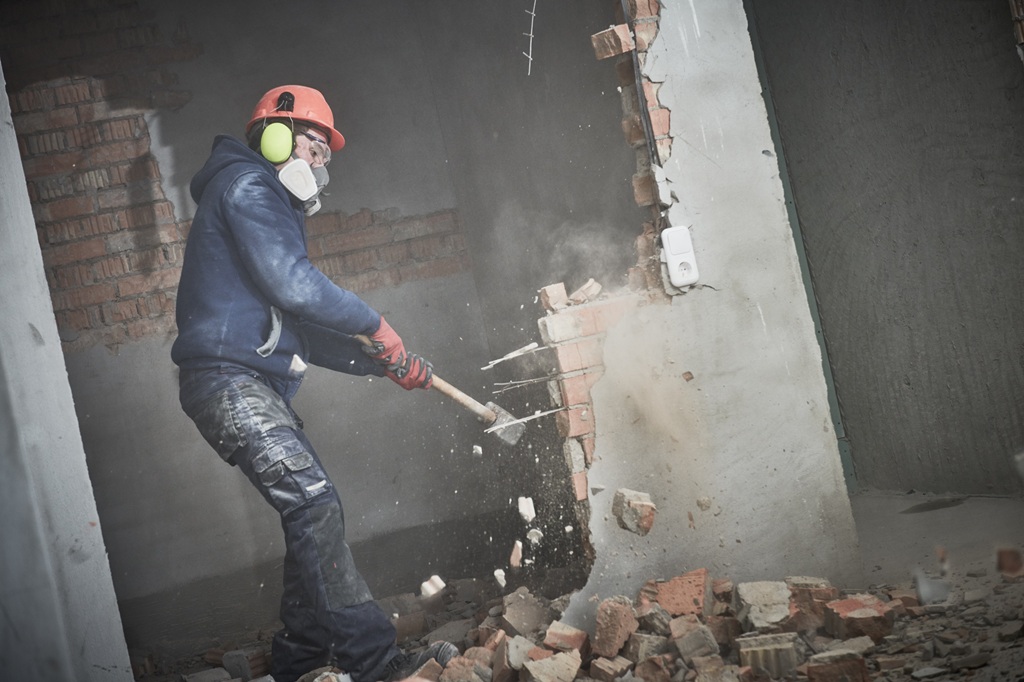
You might look at a small garden building and think nothing of it. Just a few sledgehammers and a few beers and it’s a Sunday afternoon job, right? But demolition carries genuine risks, even on a smaller scale. Roofs can collapse unpredictably, nails and broken glass are easily hidden in rubble, and unstable walls can behave very differently once part of the structure is removed.
Demolition is still treated as construction work, which means formal client duties normally pass to the contractor or principal contractor carrying out the job. That doesn’t mean the homeowner should ignore safety altogether though. Always check you’re hiring fully verified and reliable workers and don’t be tempted by cheap but unvetted labour.
What Happens to All the Demolition Waste?
Usually, far more comes out of an outbuilding than you’d expect and that waste needs to be properly managed. The most important thing is to separate ordinary materials from hazardous materials and dispose of each accordingly. That separation can also keep useful material out of landfill. Sound bricks might be reused, metal can be recycled and untreated timber might be able to enjoy a whole new life as something completely different.
Clear First, Demolish Safely, Dispose Properly
Outbuilding demolition doesn’t need to become a major project, but it does need a little homework. Doing everything listed above before work begins is considerably easier than discovering an asbestos roof, live electrical cable or planning restriction once half the building is already in the skip.
If you’re preparing a garage, shed or other outbuilding for demolition, Langley’s can help with the clearance side of the job. You can contact Langley’s House Clearance for a free, no-obligation quote and discuss exactly what needs removing.
