
When you book a house clearance, it’s easy to think the job ends once the property is empty. The furniture has gone, the cupboards are clear, the garage is usable again, and the keys can move on to the next stage.
But the real question is what happens next.
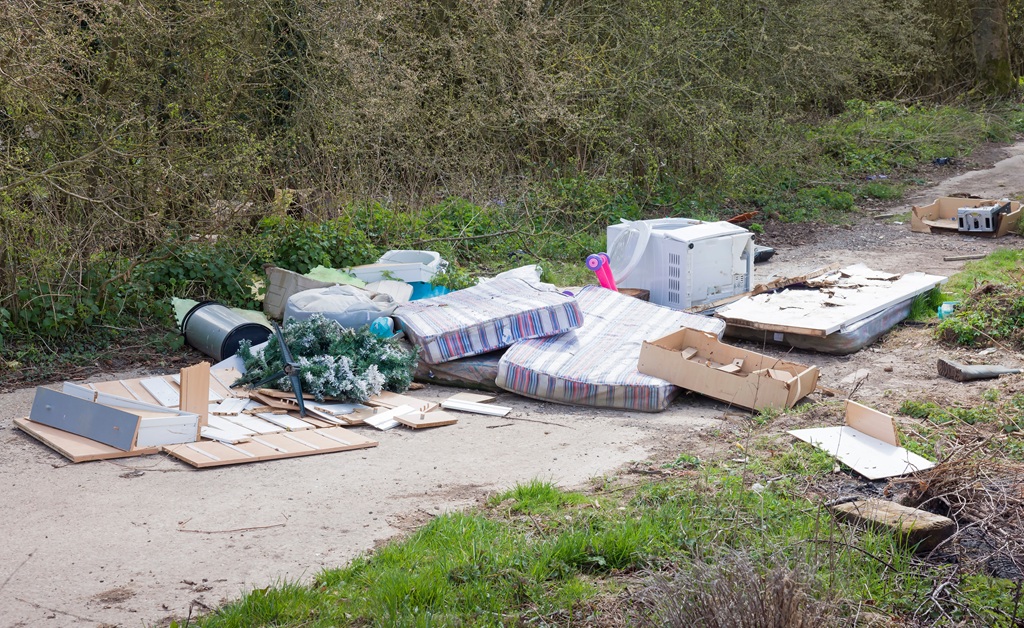
Where does that waste go? Who takes it? Is it being recycled, donated or disposed of legally? Or could it end up dumped in a field, stored at an illegal waste site or abandoned somewhere it becomes someone else’s problem?
Illegal waste activity is a serious issue across the UK, and it’s one that affects homeowners, executors, landlords, businesses, rural communities and legitimate clearance companies alike.
What Is an Illegal Waste Site?
An illegal waste site is a place where waste is stored, treated, dumped or processed without the correct environmental permit or exemption. It might look like a yard, a warehouse, a patch of land, a farm building or a concealed rural site. Some are small and opportunistic. Others are large-scale criminal operations.
The Environment Agency recorded 451 active illegal waste sites at the end of March 2025, including 176 high-risk sites. In the same financial year, it found 749 new illegal waste sites and stopped illegal activity at 743 sites. Those figures show that enforcement is happening, but also that the problem is persistent and widespread.
Illegal waste sites are not just untidy. They can create fire risks, pollute soil and water, attract pests, produce odours, damage habitats and leave landowners or public bodies with huge clean-up costs.
Waste Crime Is Not a Minor Problem
Waste crime is sometimes treated as if it’s just a nuisance. In reality, it’s a costly and organised problem.
Waste criminals cost the economy an estimated £1 billion every year. In 2025, it also published heatmaps showing 16,773 reports of suspected waste crime across England during 2023 and 2024, with the highest concentrations in the West Midlands, Yorkshire and East Anglia.
Large cases can be shocking. In 2026, the Environment Agency and Natural England investigated the illegal dumping of around 30,000 tonnes of shredded waste at Cave’s Inn Pits, a Site of Special Scientific Interest in Leicestershire. The site was being assessed for environmental impacts, including air and water quality, while officers investigated those responsible.
For anyone arranging a property clearance, this matters because waste crime often begins with a simple decision: who do you trust to take the waste away?
Why House Clearance Customers Need to Care
Householders, executors and landlords may not see themselves as part of the waste chain, but once waste leaves a property, there’s still a responsibility to make sure it’s handled properly.
GOV.UK’s waste duty of care guidance says that if you use a private business, such as a skip hire company or house clearance service, you should check they are an authorised carrier with an up-to-date and valid upper tier registration. It also explains that waste carrier registration numbers usually start with “CBDU” followed by numbers, and that you can check them on the Environment Agency public register.
That’s important because if waste is later fly-tipped or found at an illegal site, investigators may trace it back to the original property. Local authorities can consider enforcement where waste has been passed to an unauthorised person and later disposed of illegally.
In simple terms, the cheapest clearance quote isn’t always the safest one.
What Responsible Disposal Looks Like
Responsible disposal starts before the van is loaded. A reputable clearance provider should be able to explain how waste will be sorted, what can be reused, what can be recycled and what needs specialist handling.
During a house clearance, this might include separating furniture, electrical items, textiles, paper, metals, garden waste, confidential documents and general rubbish. It also means identifying materials that need extra care, such as old paint tins, chemicals, asbestos-containing materials, batteries or certain electricals.
GOV.UK’s reporting guidance describes fly-tipping as the illegal dumping of household, commercial or industrial waste, while larger-scale illegal dumping can involve lorryloads of waste, hazardous materials or organised criminal waste operations. It also lists running a waste site without an environmental permit and moving waste without being registered as forms of waste crime.
A professional clearance service should help you avoid becoming part of that chain.
The Human and Environmental Cost
Illegal waste sites can affect people who had nothing to do with the original waste. Neighbours may have to live with odours, vermin, smoke, blocked access or anxiety about contamination. Landowners can be left with expensive clean-up problems. Legitimate waste companies are undercut by operators who avoid proper fees, permits and environmental standards.
The Environment Agency says illegal waste sites can contain materials that pollute land, water or air, and it assesses risk by considering waste type, nearby communities, rivers, habitats, wildlife and whether pollutants could spread through soil, groundwater or air.
That’s why responsible disposal isn’t just an administrative detail. It’s about protecting communities and making sure waste goes where it’s supposed to go.
How to Avoid Rogue Operators
There are some simple warning signs to watch for. Be cautious if a clearance provider refuses to give a licence number, only accepts cash, gives a vague price without seeing the job, can’t explain where waste goes or seems unusually cheap compared with other quotes.
Before booking, ask:
- Is the company registered as an upper tier waste carrier?
- Can they provide their waste carrier licence number?
- Do they recycle or donate usable items?
- Will they handle hazardous items correctly?
- Can they provide clear pricing and documentation?
Langley’s House Clearance is fully licensed by the Environment Agency as an upper tier waste carrier and lists its licence number as CBDU141056. Langley’s also states that it is a verified member of AFTA, the Anti Fly Tipping Association, and diverts 95% of waste from landfill where possible.
The company also provides full and part clearances, rubbish clearance, garage clearance, loft clearance, garden clearance, probate support and bereavement clearances, with a focus on legal disposal and responsible reuse.
Final Thoughts
Illegal waste sites are not distant, abstract problems. They’re part of a wider waste crime system that starts with poor decisions, weak checks and operators who cut corners.
For homeowners, executors, landlords and families arranging a clearance, responsible disposal is critical. It protects you legally, protects the environment and helps prevent waste ending up in the hands of criminals.
A good house clearance should leave more than an empty property behind. It should leave peace of mind.
Need a Licensed and Responsible Clearance Team?
If you’re arranging a house clearance and want to know your waste will be handled legally, carefully and responsibly, Langley’s House Clearance can help.
For friendly advice or a free, no-obligation quote, contact Langley’s House Clearance today.
