
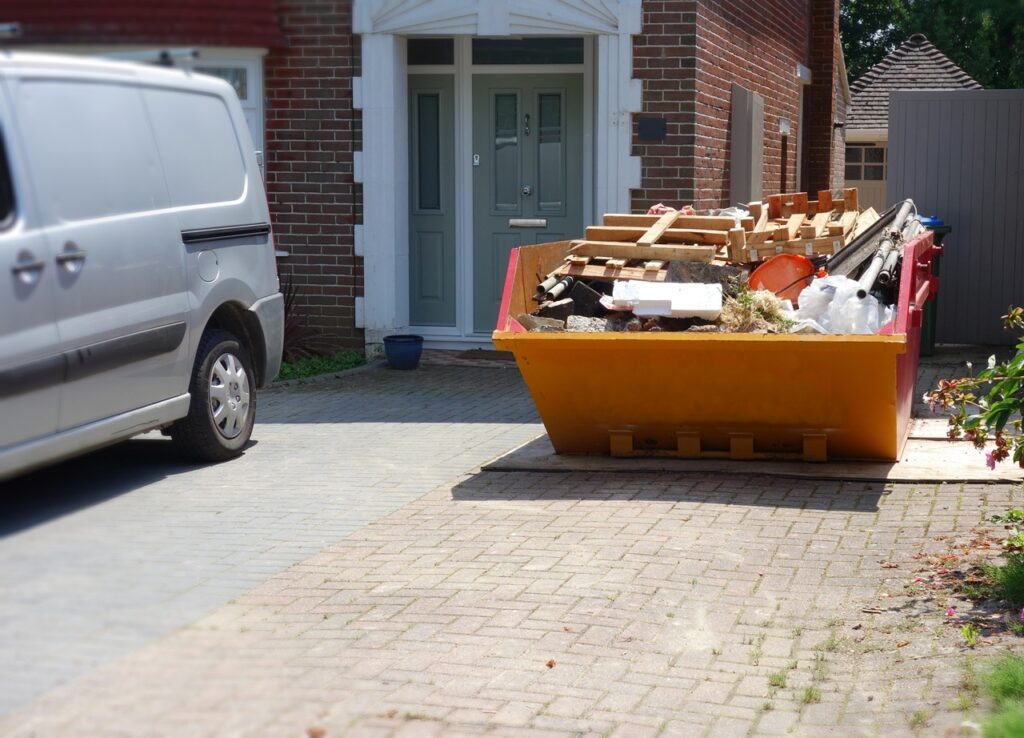
When it comes to saving money on a home clearance, the obvious answer might be to simply take care of it yourself. But anyone who thinks that has probably never actually tried to clear a house before. It is very physical work and can be incredibly fiddly. If you’ve ever tried lifting a wardrobe down a flight of stairs, you’ll know exactly what we mean.
A full house clearance, you see, is not just physically demanding work, but it’s also a sorting, transport, recycling and even legal disposal job. Add probate, bereavement or a tight property-sale deadline and that DIY option can become considerably less appealing and start to feel more like an expensive chore than you first thought.
There are situations where clearing a few cupboards yourself makes perfect sense but for an entire property, professional help can save you so much more than a few aching muscles.
1. You Know the Waste Is Being Handled Legally
Once unwanted belongings become waste, getting them out of the property is only half the battle. This waste still needs to go somewhere.
Homeowners in England have a legal obligation to take reasonable steps to ensure their waste is given only to an authorised person and if you’re hiring a professional organisation, you know that obligation is being covered.
Even then, however, Government guidance specifically says that if you employ a house-clearance business, you should always check that it holds valid upper-tier waste-carrier registration. Because if you hire a rouge company and your waste subsequently ends up fly-tipped on the side of a road somewhere, you will still be held responsible. If you hire an authorised carrier, you’ll also be offered records demonstrating that you acted responsibly.
For anyone planning a larger job, Langley’s house clearance services cover everything from full and partial clearances to garages, lofts, gardens and rubbish removal.
2. It’s Faster Than Discovering Halfway Through That You’ve Underestimated the Job
Homes have an extraordinary ability to hide possessions in nooks and crannies. A room that looks manageable on the surface can contain dozens of drawers, cupboards and wardrobes packed with forgotten rubbish.
Doing the job yourself means sorting, carrying, dismantling, loading, driving, unloading and potentially making repeated journeys. Then there’s the furniture that won’t fit through the door until it’s been completely taken apart.
Professional teams already have the staff, vehicles and equipment to deal with that scale. There’s also a genuine safety issue here as lifting and carrying heavy or bulky loads can cause serious injuries if you’re not used to it.
There’s the issue of time too, because what might consume several weekends of DIY work can often be sorted in a single day when everyone involved does this kind of work regularly.
3. More of Your Belongings Can Get a Second Life
A DIY clearance can easily become a race to get everything into the nearest skip as soon as possible and when we rush, we’re more likely to chuck things away that could have been saved from the tip.
That’s where experience changes the outcome. A responsible clearance company can sort the wheat from the chaff as it goes, identifying items suitable for charity, reuse or recycling rather than treating everything as one waste stream.
Langley’s is proud to divert around 95% of the waste it handles from landfill, forwarding useful items to charities, animal shelters and recycling centres wherever possible.
That can make a home clearance feel like more of a benevolent and useful event than a thankless chore.
4. Professionals Know When Something Needs Special Handling
Complications can arise quickly in a home clearance. For example, electricals and batteries shouldn’t simply disappear into the general rubbish but should only be sent to properly labelled recycling stations.
Not only can they contain materials worth recovering but because batteries (particularly the lithium-ion types found in our smartphones), can pose significant fire risks when damaged or incorrectly discarded.
Then there’s the old familiar monster still lingering around in thousands of homes from the last century. The HSE says asbestos may still be present in homes built or refurbished before the year 2000, including in floor tiles, pipe lagging, asbestos cement, textured coatings and insulation boards. If you suspect asbestos, the advice is not to start pulling it apart yourself.
A professional clearance isn’t about bravely throwing everything into the same van. It’s about recognising when something needs to be separated, assessed or handled through a specialist route.
5. Some Clearances Need More Than Muscle
There’s another reason DIY isn’t always the easier option, and it has nothing to do with heavy lifting.
Clearing a family home after a bereavement or during probate can be surprisingly emotional. Every drawer can contain something that makes you stop. Every room can prompt another decision about what should be kept, valued, passed to family or donated.
Langley’s provides specialist support for both bereavement and probate clearances, including collecting keys from estate agents, administrators or family contacts where necessary. Its probate service also includes valuations and assistance identifying potentially valuable antiques, jewellery, art and collectables.
Sometimes the real benefit of professional clearance is simply having someone impartial handle the practical work while you concentrate on the more emotional decisions only you can make.
When DIY Stops Being the Cheapest Option
Doing a small clearance like a flat or spare room yourself can be perfectly sensible but once you factor in the complications and tribulations of a large family home, the savings disappear quickly. A professional service gives you a clear plan, the right people for the job and reassurance about what happens after everything leaves the property.
If you’re weighing up DIY against professional clearance, Langley’s offers free, no-obligation quotations tailored to the individual property and the work involved. Contact Langley’s House Clearance to talk through what needs clearing before deciding which route makes the most sense for you.
